Soil sensor connection
Serial communication connects the seven-in-one soil sensor to the device backend.
 Industrial hardware, explained.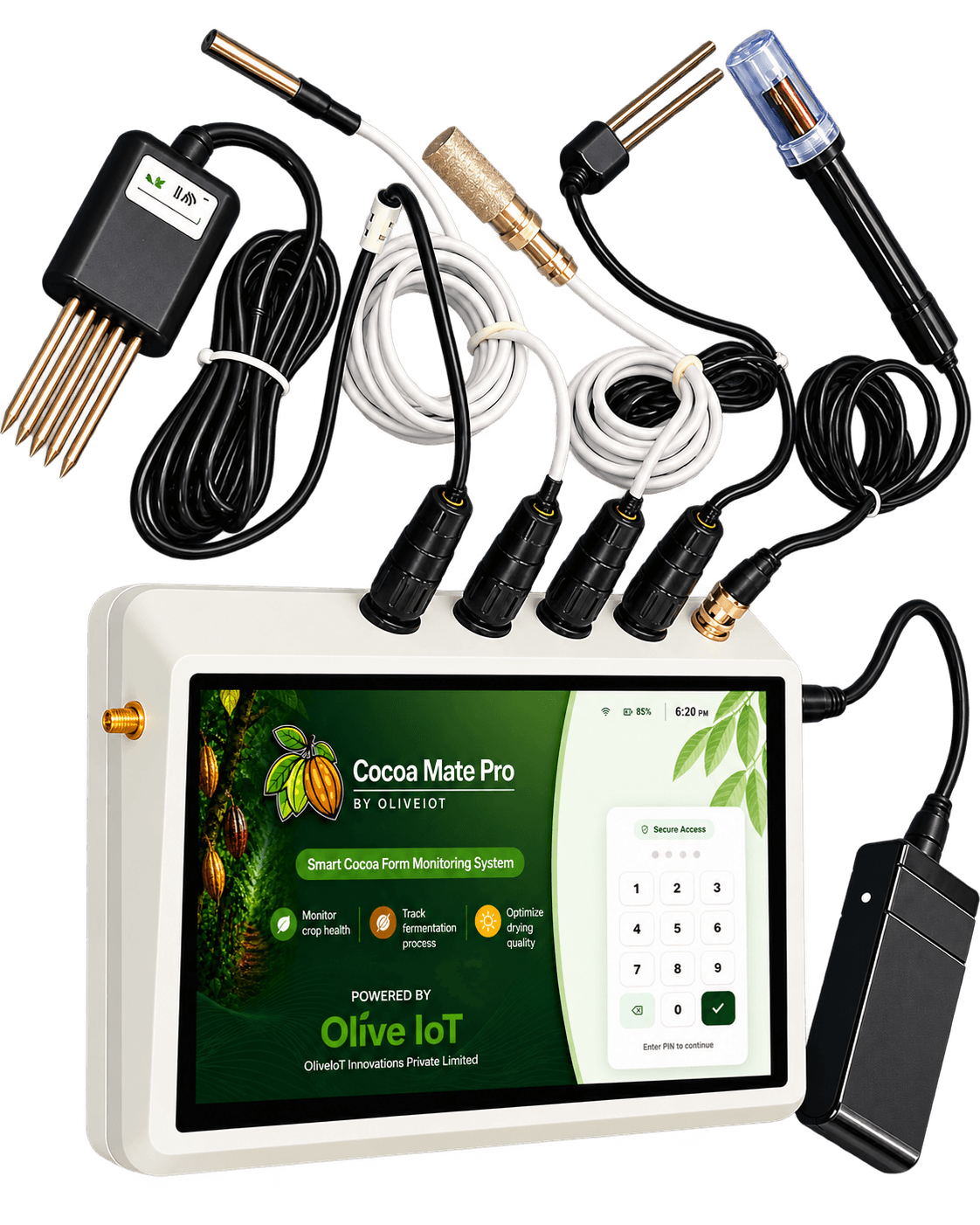
Smart agriculture
IoT and AI-assisted monitoring from cocoa crop to fermentation and drying.
Follow cocoa conditions through three production stages in one dashboard. CocoaMate Pro brings together sensor readings, hourly history, warnings and AI-assisted guidance to help farmers and processing teams review conditions and decide what to do next.
Hardware, connectivity, power and expansion details.
Core features
Suitable applications
Communication and interfaces
These are the supported hardware interfaces and protocols stated for this product.
Serial communication connects the seven-in-one soil sensor to the device backend.
The described backend includes SHT40 and Dallas sensor integrations. pH and grain-moisture hardware integrations remain to be completed in that version.
A web dashboard reads stage-specific measurements, history and insights from the device service.
Configured Gemini access provides AI-assisted guidance. Local rules provide fallback recommendations when the AI service is unavailable.
Student view
Understand how sensor measurements become useful decisions across crop monitoring, fermentation and drying. Follow a reading from the device through the dashboard, history and guidance.
Example projects showing what this product can read, control and report. Each requires the appropriate sensors, connected equipment and application software.
Example: monitor soil moisture, temperature, pH, EC and NPK alongside air conditions. A farmer reviews readings and trends to identify plots needing attention and plan irrigation or nutrient checks.
Example: follow solid-temperature readings and, with the pH sensor integrated, slurry acidity during a batch. Operators use the history and guidance to review changing conditions and decide when to inspect or turn the beans.
Example: once grain-moisture sensing is integrated, review bean moisture alongside air temperature and humidity. Workers track drying progress, inspect unusual conditions and assess readiness against their validated process targets.
More in this family
Smart agriculture
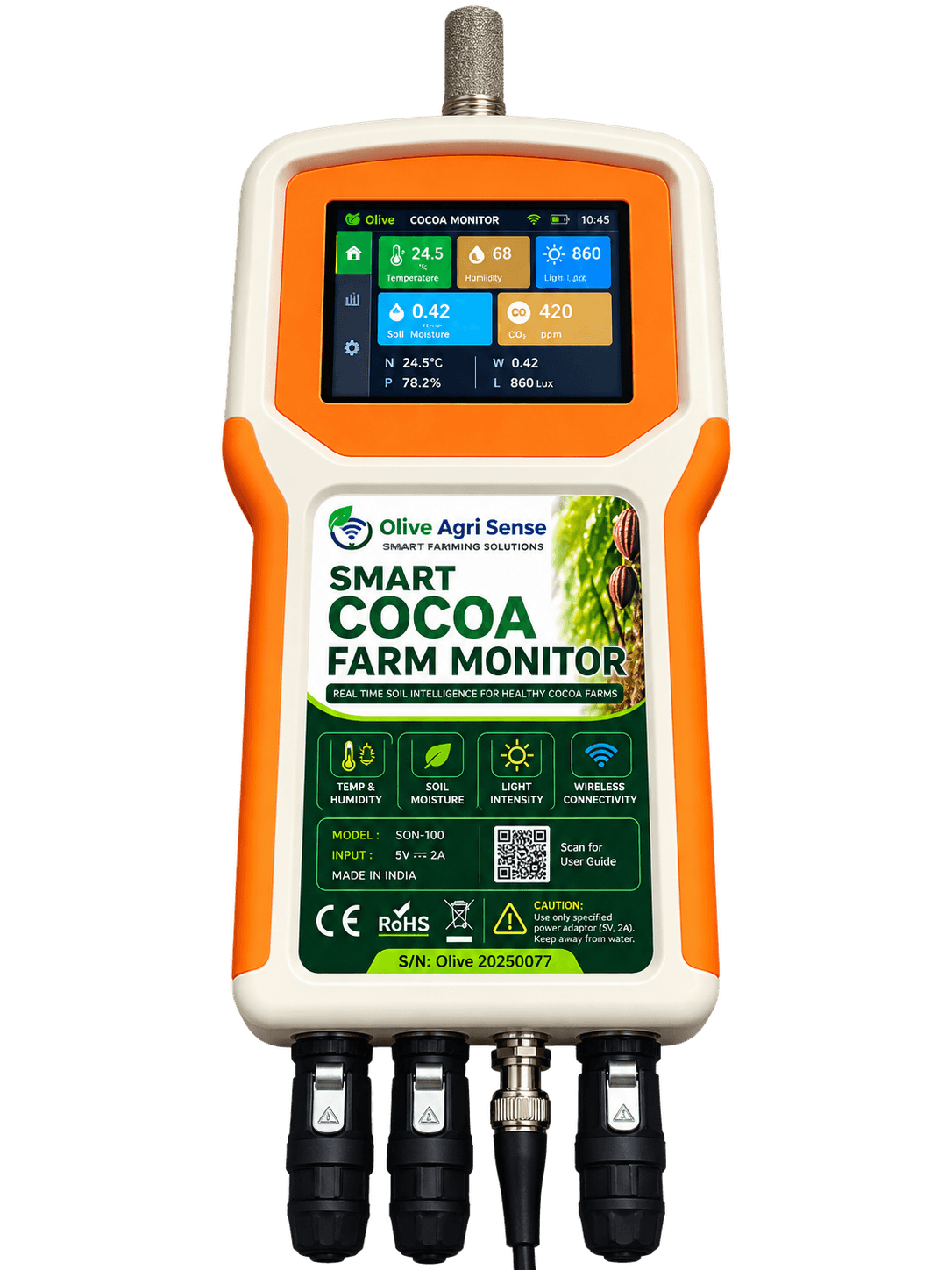
Cost-effective ESP32 handheld monitor with a touch TFT display and Wi-Fi cloud transmission.